

Video InterviewAbout This Article w/Laolu Adeola

Getting boots on the ground quickly is not enough. Fleets must now master charging management, one of the newest capabilities, the most critical of all the new skills the transition to EVs demands.
Reliability is not whether EV chargers break. It is how fast service is restored afterward. The industry has spent years optimizing for uptime as the headline metric. That metric is not wrong. It is just insufficient.
Charged Fleet
*Summarized by AI
A fleet operator ran a charger through an internal benchmarking program. The unit failed. It stayed broken for over 97 days, and for every one of those days, the charging management software reported it as available.
No error, no flag, nothing.
Standard diagnostics blamed the vehicle, looping through the same questions repeatedly. After much effort, the fault was traced to the connectors.
It was a physical problem, hiding behind a software dashboard that said everything was fine.
We all understand that chargers will fail sometimes, but we need to be able to trust the systems to tell us when they do and help us fix them.
It turned out to be a costly 160-day lie.
Before writing off the 97-day failure as an anomaly, consider the scale of the problem it represents.
The industry-wide cost of charging station downtime runs to roughly $500 million per year in truck rolls and missed revenue. A “99% uptime” SLA, the standard most operators celebrate hitting, still equals nearly 90 hours of downtime per asset per year. Industry data covering over 100,000 charging sessions across 2,400 stations found that despite reported uptime of 98.7% to 99.9%, only 71% of charging attempts succeeded. New stations average an 85% first-time charge success rate; by year three, that drops below 70%. At 97% uptime, mean time to repair runs to 11 days.
The gap between what the dashboard says and what the driver experiences is the signal fleets need to act on.
What does this look like in practice?
One of the largest EV school bus fleets in the U.S., running more than 600 EVs and chargers, found that engineers hired to expand the program were instead stuck reading open charge point protocol (OCPP) logs by hand. One of the fastest-growing public charging networks in the country spent weeks trying to build internal solutions to root-cause charging failures, gave up, and went looking for a software vendor.
A survey of more than 500 charger operators independently identified the same gating constraint: It is not labor, but software.
“Roughly one in seven sessions hits an issue,” said Josh Silets, co-founder of GridLink, which automates EV charger operations and fixes failures remotely. “Sometimes it surfaces as an opaque fault code, sometimes as a clue buried in a diagnostic log. 80% of these issues are remotely resolvable. Vertically integrated operators solved this with very smart software years ago, and the same capability is now cheap enough for everyone else to deploy.”
EV charging infrastructure scaled deployment far faster than it scaled operational maturity. The industry agreed on uptime numbers. It is only now fixing the gaps to refine what “working” means.
“It really becomes this increasing web of potential failure points,” said Grayson Eady, chief executive of EVision Solutions, a consultancy that advises municipal governments, fleets, and charging technology companies across the southeastern U.S. “Just because the system gets very complicated very quickly. That’s why you have so much finger-pointing when something goes wrong. There could be a bunch of reasons.”
Standard procurement still treats chargers as standalone electrical equipment like a generator. But EV chargers are five-layer systems: hardware, firmware, charge management software (CMS), OCPP, and vehicle communications.
When one of those layers fails or the seams between them break down, the hardware dashboard often continues to report green. Vehicles sit uncharged and routes get missed. Nobody knows why, because the tools designed to surface that information were built for a different category of assets.
Consider how other technology industries evolved. Many started vertically integrated and slowly divested as they matured, handing off responsibility cleanly as standards emerged.
Electric vehicles supply equipment (EVSE), another term for EV chargers, did the opposite. It entered the market as a fragmented, multi-vendor system sold as a single piece of equipment, before the edge cases were handled and before the software was battle-tested. That fragmented model enabled rapid deployment. It is also the reason the gaps now demand attention.
One pattern recurs across case studies. A large fleet deploys smart chargers expecting low-touch, automated operations. Within months, sessions fail, chargers freeze, and state-of-charge reporting turns inconsistent. The vendor’s CMS surfaces minimal insight.
To keep routes running, the fleet builds an internal shadow ops team: engineers and technicians manually watching screens, restarting chargers, stitching together logs. Engineers hired to expand the program end up babysitting infrastructure instead. The electrification program, intended as a cost-reduction lever, becomes operational debt.
A separate failure mode is firmware. At one depot, a vendor’s remote system reported chargers as online while they were visibly dead onsite, caused by two conflicting backend stacks controlling the same hardware.
At another location, a firmware update took a charger offline for three days before anyone noticed, because no one tried to use it during that window. From operators’ perspectives, the infrastructure felt flaky and unpredictable. Leadership hesitated, slowing deployments since.
Reliability growing pains are a sign of a maturing industry. Optimization is the natural next phase, and efficiency, reliability, and recovery define every fleet’s ability to perform at its core mission.
The wave of 2030 electrification budget commitments across utilities, municipalities, last-mile operators, and corporate fleets is building. Those procurement cycles will either entrench today’s broken default or encode a better default. The industry has a narrow window to choose. Closing the reliability gap now will help this infrastructure achieve its critical role.
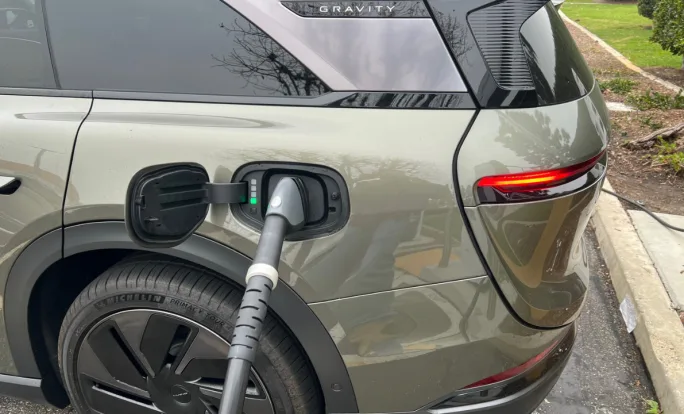
Standard procurement still treats chargers as standalone electrical equipment like a generator. But EV chargers are five-layer systems: hardware, firmware, charge management software (CMS), OCPP, and vehicle communications.
Martin Romjue / Charged Fleet
For utilities, public agencies, last-mile operators, and large fleets where 1% unresolvable downtime may diminish critical goals, the moves need to be deliberate.
A 2025 survey across fleet charging networks found that only 30% of fleet operators recover from a charger failure in under 4 hours, and nearly half experience outages lasting 4-24 hours.
That is the baseline. Here is how to move off it:
Most fleets will not run their own diagnostic engagement with charger OEMs and CMS vendors. They do not need to. But they do need a recovery posture: a documented plan for what happens when a charger fails, not if.
Eady cautioned against substituting volume for quality: “What’s really going to win the day are deep integrated partnerships, not the idea that it doesn’t matter what hardware you buy,” he said. “Right now, ‘good enough’ typically means over-procuring infrastructure in the hope that redundancy makes up for gaps in uptime, much like how many fleets operate their vehicle pool. But as with vehicles, fleets must right-size to optimize operations and reduce costs over the long run. Building relationships with deep technical partners and enshrining performance expectations into procurement contracts is what ensures chargers work when they are needed.”
Reliability is not whether EV chargers break. It is how fast service is restored afterward.
The industry has spent years optimizing for uptime as the headline metric. That metric is not wrong. It is just insufficient. Getting someone on site in two minutes does not mean the problem gets solved. Uptime tells you whether a charger is technically available. First-time charge success rate tells you whether a driver can actually start charging on the first attempt. MTTR tells you how long a failure disrupts operations when it does occur. Used together, these three metrics paint a complete picture of reliability as an operational reality, not a marketing number.
The primary drivers of downtime, across operator interviews and case studies, are consistent: misdiagnosis, incomplete data, lack of system access, and coordination gaps across OEMs, CMS providers, network operators, and service providers.
These are structural problems. Better hardware and faster truck rolls do not solve them. Silets sees the fix in automation: “MTTR drops by an order of magnitude when recovery loops run automatically. The fleets that pull ahead over the next phase will stop measuring ‘is it online’ and start measuring how fast a session with an issue recovers. Most of those recoveries do not need a human. The ones that do should arrive with a parts list, not a question.”
The fleets that capture the most TCO advantages over the next phase of the EV transition will treat MTTR as a first-class metric, embedded in their specs, their contracts, their training programs, and their backup plans. Vendors that do not sufficiently define what “working” means will have it defined for them, by fleets who finally know what to ask.
Loading data...

Fleet operators who manage a mix of light-, medium-, and heavy-duty vehicles can’t treat charging as an add-on to fueling. Here’s how to develop a specific strategy.

Charging
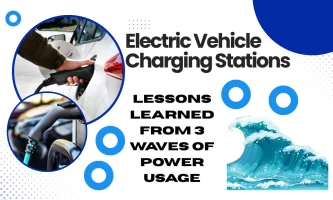
A seamless charge depends on a string of independent companies getting it right together, every time. How can electric fleets navigate the challenges to create a successful charging plan?
Charging
Getting boots on the ground quickly is not enough. Fleets must now master charging management, one of the newest capabilities, the most critical of all the new skills the transition to EVs demands.
Charging
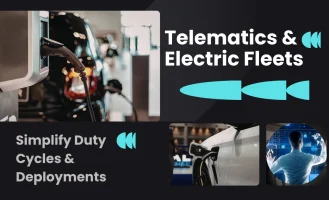
As more fleets transition to EVs, those that embed telematics deeply into their workflows will expand deployments with fewer surprises and more predictable economics.
Charging
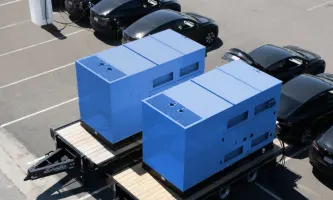
Off-grid charging assets have proven to be much more than stopgaps. Fleets can use those tools to hedge against grid delays, capacity bottlenecks, and other uncertainties.
Charging
Here's why the EV transition stopped being centered on ideology and started focusing on operational benchmarks.

Electric Vehicles
Follow these three concepts to get the most value when cycling out your electric fleet vehicles.
Operations
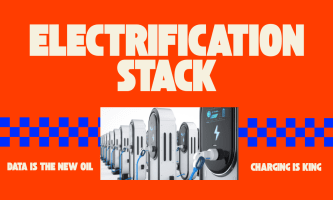
Successful electrification means reimagining fleet operations by building a system in which every vehicle is optimized for its role.